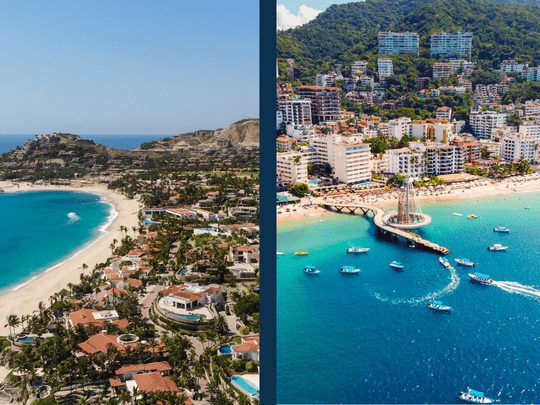
Puerto Vallarta weather is simple to sum up: it is warm all year, with a dry season from November to May and a rainy season from June to October. The details matter, though, because a week in February and a week in August are very different trips. This guide goes through Puerto Vallarta weather by month, with the long-term averages for temperature and rain, what each month feels like, and what is happening in town.
The short answer on the best time to visit Puerto Vallarta: December to April for the most reliable sunshine and cool evenings, January and February if you want whales, and May or November if you want warm, mostly dry days with fewer people. Summer is hot, humid and stormy, and also green, quiet and usually cheaper. Jump to your month below.
The best time to visit Puerto Vallarta
It depends on what you want from the trip. Here is the quick version:
- Best weather: December to April. Dry season, sunny days, low humidity and cool evenings, especially December to March.
- Whales: January and February, the peak of the whale watching season that runs from early December to late March.
- Fewer crowds and lower rates: May, early June and November. Warm and mostly dry, with fewer visitors than the winter peak.
- Green season and quiet: June to October, if you do not mind heat, humidity and afternoon storms. The hills turn green and the waterfalls run full.
- Holidays: Thanksgiving week through New Year’s, the busiest and most festive stretch of the year. If that is your window, book your flights early.
Puerto Vallarta weather by month at a glance
The table below shows the average temperature and rainfall for each month in Puerto Vallarta, based on long-term averages.
| Month | Avg high | Avg low | Rain | Rainy days | Season |
|---|---|---|---|---|---|
| January | 80°F (27°C) | 62°F (17°C) | 1.3 in (34 mm) | 2 | Dry, high season |
| February | 80°F (27°C) | 62°F (17°C) | 0.2 in (5 mm) | 1 | Dry, high season |
| March | 81°F (27°C) | 63°F (17°C) | 0.1 in (2 mm) | 1 | Dry, high season |
| April | 82°F (28°C) | 66°F (19°C) | 0.1 in (2 mm) | 0 | Dry, shoulder |
| May | 85°F (29°C) | 71°F (22°C) | 0.6 in (15 mm) | 1 | Dry, shoulder |
| June | 89°F (32°C) | 77°F (25°C) | 7.4 in (188 mm) | 11 | Rainy, low season |
| July | 90°F (32°C) | 77°F (25°C) | 12.9 in (328 mm) | 16 | Rainy, low season |
| August | 90°F (32°C) | 76°F (24°C) | 12.3 in (312 mm) | 15 | Rainy, low season |
| September | 90°F (32°C) | 76°F (24°C) | 14.6 in (370 mm) | 16 | Rainy, low season |
| October | 89°F (32°C) | 75°F (24°C) | 3.7 in (94 mm) | 5 | Rainy ending, low season |
| November | 86°F (30°C) | 69°F (21°C) | 0.8 in (20 mm) | 1 | Dry, shoulder |
| December | 82°F (28°C) | 64°F (18°C) | 0.9 in (22 mm) | 2 | Dry, high season |
These are long-term averages, and individual years vary. Puerto Vallarta gets about 54.8 inches (1,392 mm) of rain a year, nearly all of it from June to October. September is the wettest month, and March and April are the driest.
Puerto Vallarta’s seasons
Puerto Vallarta weather runs on two seasons rather than four, with a hurricane window layered over the wetter half of the year.
The dry season (November to May)
From November to May it rarely rains, and from February to April it barely rains at all. The winter months bring low humidity, sunny days and cool evenings from December to March, when you will want a light layer for dinner. April and May warm up and the evenings turn mild, but the sky stays mostly clear.
This is also the travel high season. It runs from about mid-December through Easter, with the Christmas to New Year’s weeks the busiest, and Thanksgiving week marks the start. April, May and November are the shoulder months: warm, mostly dry and noticeably less crowded than peak winter.
The rainy season (June to October)
From June to October, Puerto Vallarta is hot and humid, with highs around 90°F (32°C) and lows that stay in the mid 70s°F (about 24 to 25°C). This is when nearly all of the year’s rain falls. The rain often comes as heavy afternoon or evening storms rather than all-day drizzle, so mornings are frequently fine for the beach.
The payoff is the landscape. The hills behind the city turn deep green, and waterfalls such as Palo María and the one at Yelapa run fuller than at any other time of year. It is also low season: restaurants and beaches are quieter, and rental rates are usually lower.
Hurricane season
The Eastern Pacific hurricane season runs from May 15 to November 30. Storms are possible anywhere in that window, and the risk is highest in late summer and early fall. Puerto Vallarta sits inside a large bay, but no coastal destination is immune, so treat this as a practical planning point rather than a reason to stay away.
If you travel between June and October, buy travel insurance that covers weather, keep your plans flexible, and watch the forecast in the week before you fly. Most summer visits pass with nothing more dramatic than an evening storm, but it is sensible to be prepared.
Puerto Vallarta weather month by month
Each month below stands on its own, so skip straight to the one you are planning around. Temperatures and rain are long-term averages.
Puerto Vallarta weather in January
Puerto Vallarta in January averages a high of 80°F (27°C), a low of 62°F (17°C) and about 1.3 inches (34 mm) of rain over about 2 rainy days. It is the heart of the dry season: sunny days, low humidity and cool evenings that call for a sweater or light jacket after dark.
January is a peak month for humpback whales, which are in Banderas Bay from December to late March, with activity highest from mid-December through February. It is one of the two months we recommend for whale watching in Puerto Vallarta. The first week of January is still part of the holiday rush, and the rest of the month stays busy, so book rentals and tours ahead.
The cooler weather also makes January a good month to get into the hills. Our guide to hiking trails covers walks that are far more pleasant at 80°F than in the summer heat. January suits almost everyone: beach days are warm, nights are comfortable, and the water is at its coolest but still swimmable for most people.
Puerto Vallarta weather in February
Puerto Vallarta in February averages a high of 80°F (27°C), a low of 62°F (17°C) and only about 0.2 inches (5 mm) of rain, with about 1 rainy day. It is one of the driest and most dependable months of the year, with the same sunny days and cool evenings as January.
February is the other peak whale month. Humpbacks, including mothers with calves, are still in the bay. It is also still high season, so the Romantic Zone restaurants are full and the beaches are lively, though without the Christmas crowds.
If your dates are flexible and you want the classic Puerto Vallarta weather, February is hard to argue with: dry, warm but not hot, and whales offshore. For many travelers it is the best time to visit Puerto Vallarta, so rentals book up well in advance. Pack a light layer for evenings and a long-sleeve shirt for boat trips, where it feels cooler on the water.
Puerto Vallarta weather in March
Puerto Vallarta in March averages a high of 81°F (27°C), a low of 63°F (17°C) and about 0.1 inches (2 mm) of rain, with about 1 rainy day. Along with April, it is the driest month of the year. Days are warm and sunny, evenings are still cool enough for a light layer, and humidity stays low.
The whale season winds down through March and closes in late March, so early in the month is your last reliable chance to see humpbacks. In 2027, Easter falls on March 28, so Semana Santa (Holy Week) runs from March 21 to 28, 2027, and many Mexican families head to the beaches that week. Expect full beaches and busy restaurants, and book early if you are coming then.
March suits travelers who want dry-season certainty without the deep-winter prices and crowds of the holidays. Pick dates before Semana Santa for the quietest version of the month.
Puerto Vallarta weather in April
Puerto Vallarta in April averages a high of 82°F (28°C), a low of 66°F (19°C) and about 0.1 inches (2 mm) of rain, with almost no rainy days. It is the driest month alongside March, and it is where the evenings start to turn from cool to mild.
April is a shoulder month. Once Easter has passed, the high season tapers off, and you get warm, sunny days with fewer visitors and often better availability. The whales have left, but the beaches are at their best for simply lying on, and this is a good month to work through the Puerto Vallarta beaches one by one, from Los Muertos to the coves south of town.
April suits beach-focused travelers who want dry weather without high-season pricing. Bring a hat and high-SPF sunscreen; the sun is strong even when the air feels comfortable.
Puerto Vallarta weather in May
Puerto Vallarta in May averages a high of 85°F (29°C), a low of 71°F (22°C) and about 0.6 inches (15 mm) of rain, with about 1 rainy day. The heat is building and the nights are warm now, but the rain has not yet arrived, so May is one of the last mostly dry months before summer.
It is a quiet shoulder month with lower visitor numbers than winter and, usually, lower rates. Two events stand out. Puerto Vallarta Pride usually takes over the Romantic Zone in late May, around the U.S. Memorial Day week, with parties and events all week; our LGBTQ+ travel guide has the background. Restaurant Week usually runs from mid-May into early June, with set menus at restaurants across the city, so check the dates for your year and book ahead.
May suits travelers who like it warm, want value and would rather have an uncrowded beach than a cool evening. The water is warming up too.
Puerto Vallarta weather in June
Puerto Vallarta in June averages a high of 89°F (32°C), a low of 77°F (25°C) and about 7.4 inches (188 mm) of rain over about 11 rainy days. This is the month the rainy season begins. The first half is often still mostly dry, and the rain usually picks up as the month goes on.
Humidity climbs, nights stay warm, and the sea is now warm enough that you will not think twice about getting in. The hills start to green up, and the city is noticeably quieter after the winter and spring crowds. It is also the start of low season, so rental rates are usually lower.
June suits travelers who want heat, value and quiet, and who are happy to plan around an afternoon storm. Our guide to summer in Puerto Vallarta covers how locals handle the season.
Puerto Vallarta weather in July
Puerto Vallarta in July averages a high of 90°F (32°C), a low of 77°F (25°C) and about 12.9 inches (328 mm) of rain over about 16 rainy days. It is hot, humid and wet, and the rain usually arrives as heavy storms later in the day rather than steady rain all day.
The upside is a city at its greenest and quietest. Waterfalls such as Palo María run full, the jungle hills behind town are lush, and the beaches and restaurants have room to spare. The sea is warm, often in the mid 80s°F (around 29 to 30°C).
July suits travelers who do not mind the heat and want the low-season experience: lower rates, no crowds and dramatic skies. A rooftop pool with a covered lounge is worth a lot in July, and a light rain jacket belongs in your bag every evening.
Puerto Vallarta weather in August
Puerto Vallarta in August averages a high of 90°F (32°C), a low of 76°F (24°C) and about 12.3 inches (312 mm) of rain over about 15 rainy days. It is the middle of the rainy season, with humidity around 70%, warm nights and frequent storms.
August sits squarely inside hurricane season, so keep plans flexible and buy travel insurance. Many days follow the same pattern, sunshine and then a storm, and watching the storms roll in over the bay is part of the experience.
August suits budget-minded travelers and anyone who wants the green, uncrowded version of the city. Plan beach time and boat trips for the mornings, and keep the afternoons for the pool, a long lunch or a siesta.
Puerto Vallarta weather in September
Puerto Vallarta in September averages a high of 90°F (32°C), a low of 76°F (24°C) and about 14.6 inches (370 mm) of rain over about 16 rainy days. It is the wettest month of the year and still deep in hurricane season, so this is the month that most demands flexibility and insurance.
It is also one of the most Mexican months to be here. Independence Day celebrations fill the night of September 15 and the day of September 16, with crowds downtown and plenty of noise and color. Our Puerto Vallarta in September guide covers the celebrations and how to plan around the weather.
September suits repeat visitors, travelers on a budget and anyone who wants to see the city living its own life rather than catering to tourists. Expect some of the quietest beaches of the year and full waterfalls.
Puerto Vallarta weather in October
Puerto Vallarta in October averages a high of 89°F (32°C), a low of 75°F (24°C) and about 3.7 inches (94 mm) of rain over about 5 rainy days. The numbers tell the story: the rainy season is ending, and the drop in rainfall from September is dramatic. Early October can still be stormy, while late October often feels like the start of the dry season.
Hurricane season officially runs to November 30, so storms remain possible, especially early in the month. The heat and humidity ease slowly through October, the hills are still green from the summer rain, and the sea is at its warmest stretch of the year.
October is a transition month and a quiet one, still low season and usually good value. It suits travelers who want warm water and green scenery without the heaviest rain, and who can be flexible about dates. By the end of the month the city is getting ready for Day of the Dead and the start of high season.
Puerto Vallarta weather in November
Puerto Vallarta in November averages a high of 86°F (30°C), a low of 69°F (21°C) and about 0.8 inches (20 mm) of rain, with about 1 rainy day. The dry season is back. Days are warm and sunny, humidity drops, and the evenings turn pleasant rather than sticky. Hurricane season technically runs to November 30, so keep an eye on the forecast early in the month.
November is a shoulder month with a lot going on. It opens with Day of the Dead on November 1 and 2, when altars, marigolds and painted faces fill the streets; our guide to Day of the Dead in Puerto Vallarta explains what to see. The first humpback whales begin arriving in the bay during the month, though boat tours do not start until the official season opens in early December.
Late in the month the city shifts gears. U.S. Thanksgiving falls on Thursday, November 26, 2026, and Thanksgiving week marks the start of high season, with many restaurants serving turkey dinners. Our guide to Thanksgiving and New Year’s Eve in Puerto Vallarta covers both holidays. For the best mix of weather, value and space, aim for the first three weeks of November.
Puerto Vallarta weather in December
Puerto Vallarta in December averages a high of 82°F (28°C), a low of 64°F (18°C) and about 0.9 inches (22 mm) of rain over about 2 rainy days. It is sunny, dry and comfortable, with cool evenings that feel wonderful after a day in the sun. This is the Puerto Vallarta weather that fills the flights from Canada and the northern United States.
The month is packed. It opens with the Guadalupe pilgrimages from December 1 to 12, when processions make their way to the church downtown each evening. The official whale watching season opens on December 8, 2026, and sightings build through the month. Christmas lights go up along the Malecón, and the year ends with fireworks over the bay at midnight on New Year’s Eve. Our December traditions post walks through the whole month.
The trade-off is crowds and prices. The weeks from Christmas to New Year’s are the busiest of the year, and rentals, flights and holiday dinners book far in advance. The first half of December is calmer and just as sunny, so if you can travel before the holidays you get the same weather with more room on the beach. December suits anyone who wants reliable sun and a festive city, and whale watchers who want to be here for opening day.
Puerto Vallarta water temperature
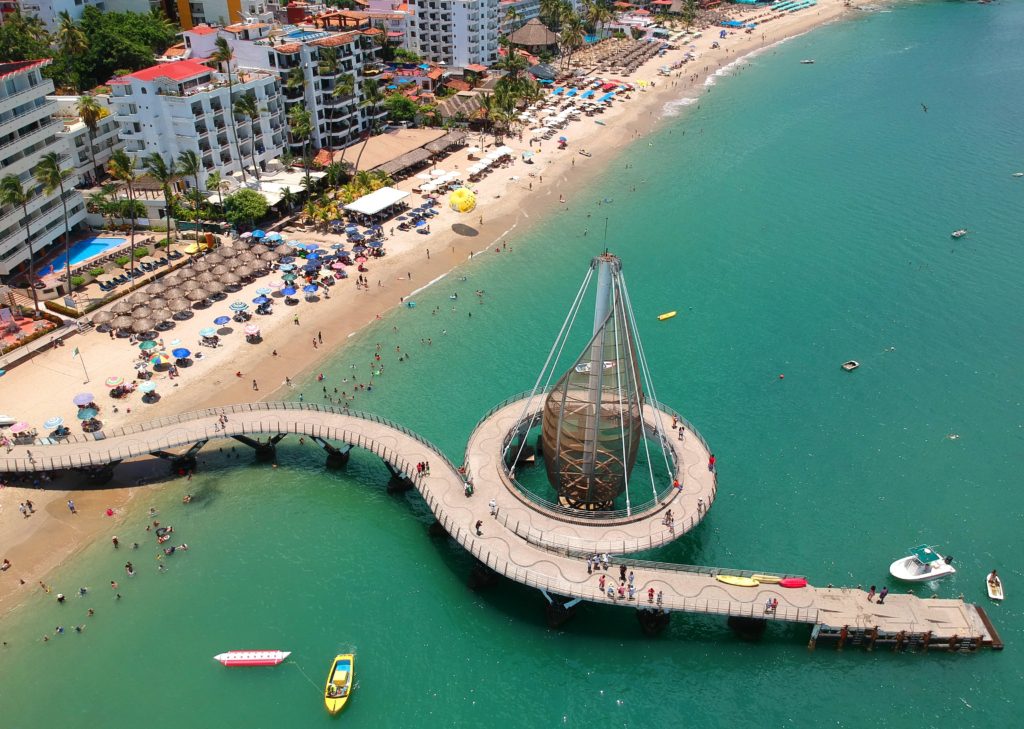
The Puerto Vallarta water temperature follows the air with a lag. The sea is coolest in late winter and spring, at around 75°F (24°C), which most people find refreshing rather than cold, and it is warmest in late summer, at around 85 to 87°F (29 to 30°C). The warmest stretch runs roughly from late June to early November.
For swimming, that means the water is comfortable all year, with the winter months feeling brisk when you first get in and the summer months feeling like a bath. For snorkeling, warm water makes longer sessions comfortable, and in the cooler months a light rash guard helps. Our guide to snorkeling spots covers where to go and what to expect.
What to pack
All year
- Light, breathable fabrics, swimsuits and a wide-brimmed hat.
- High-SPF sunscreen, sunglasses and insect repellent.
- Comfortable sandals or walking shoes for the Malecón and the Romantic Zone’s hills.
Winter evenings (December to March)
- A light sweater or jacket for dinners and rooftop evenings.
- A long-sleeve layer for boat trips, where it feels cooler on the water.
Rainy season (June to October)
- A light rain jacket or a compact umbrella.
- Water-resistant sandals that can handle a wet street.
- Extra insect repellent, since the rain brings out the mosquitoes.
Rainy-day ideas
- Visit the Vallarta Botanical Garden. The Vallarta Botanical Garden is at its greenest in the rainy season.
- Host a tequila tasting in your rental. Our guide shows you how to host a tequila tasting with bottles from the local shops.
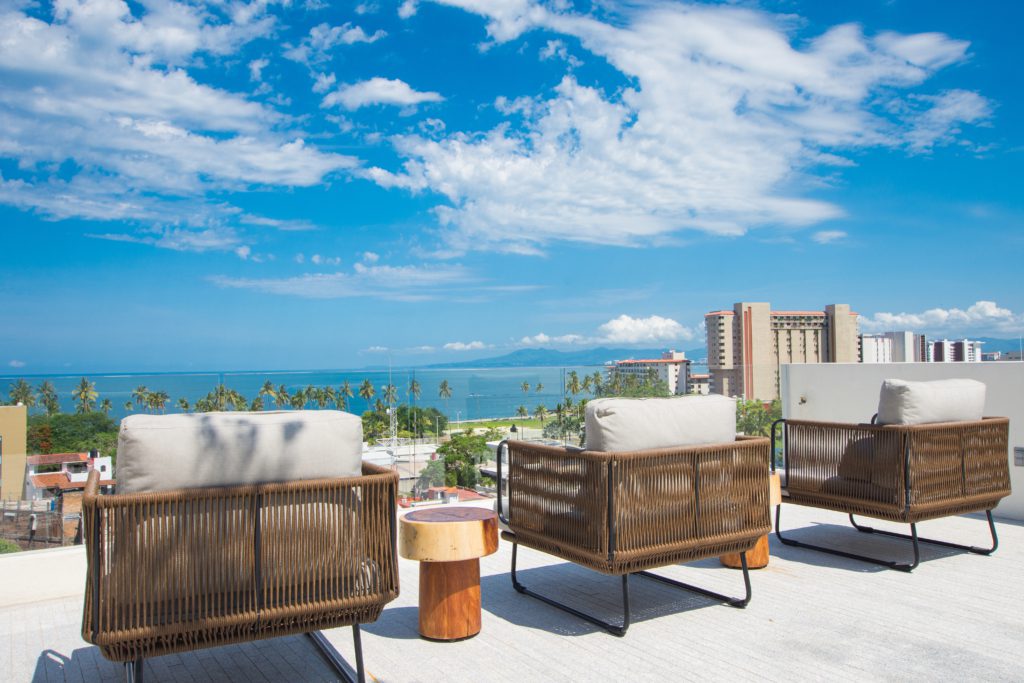
- Wait it out on the rooftop. Storms often pass within a few hours, and watching one roll across the bay from a covered rooftop lounge is a good way to spend an afternoon.
Where to stay for the season you choose
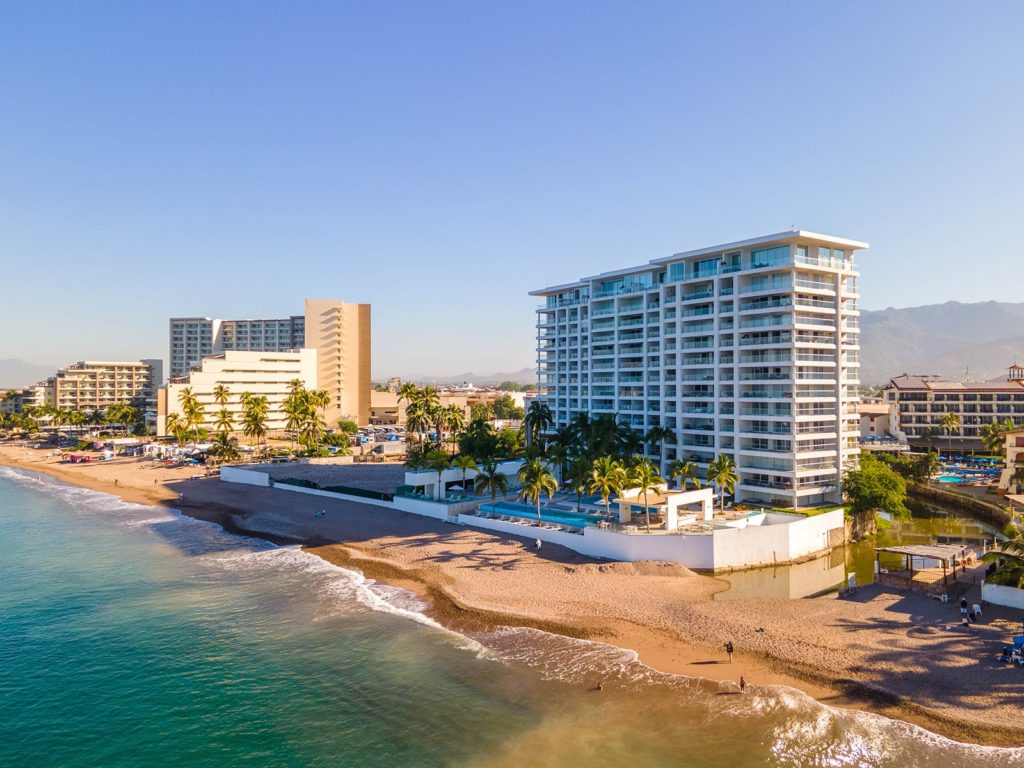
Harbor 171 in Puerto Vallarta Hotel Zone
In winter, a view of the bay earns its keep. Our Hotel Zone beachfront condos at Harbor 171 and Grand Venetian, and most of our homes in Amapas and Conchas Chinas, look out over Banderas Bay, where guests can see whales in season without leaving the balcony.
In any month, our Romantic Zone buildings put you a few blocks from Los Muertos Beach and within walking distance of the restaurants, and most of them have rooftop pools, including Soho PV, Loft 268, Zenith and Desire. In summer the pool matters more than anything else, and many of those rooftops have covered lounges for shade between swims.
Whatever the season, our team meets you at the building when you arrive, and when you book direct there are no platform fees. Pick your month, then check availability.
Puerto Vallarta weather: FAQ
What is the best month to visit Puerto Vallarta?
For weather alone, the best time to visit Puerto Vallarta is February or March: dry, sunny, warm but not hot, with cool evenings. February adds peak whale season. If you want fewer people and lower rates with still-good weather, November and May are the smart picks.
When is the rainy season in Puerto Vallarta?
June to October. Nearly all of the year’s rain falls in those five months, with September the wettest. Rain usually comes as heavy afternoon or evening storms rather than all-day rain, so mornings are often fine for the beach.
What is the average temperature in Puerto Vallarta?
The average temperature in Puerto Vallarta stays warm all year. Average highs range from about 80°F (27°C) in January and February to about 90°F (32°C) from July to September. Average lows run from 62°F (17°C) in winter to 77°F (25°C) in summer. It is warm every month of the year; the big changes are in humidity and rain, not temperature.
When is hurricane season in Puerto Vallarta?
The Eastern Pacific hurricane season runs from May 15 to November 30, with the highest risk in late summer and early fall. Storms are possible in that window, so buy travel insurance that covers weather and keep your plans flexible if you travel between June and October.
Is Puerto Vallarta too hot in summer?
It is hot and humid, with average highs around 90°F (32°C) and lows in the mid 70s°F (24 to 25°C) from June to September. Plenty of people love it: the city is green, quiet and usually cheaper. Plan beach time for the mornings, choose a condo with a pool, and treat the afternoon storm as a built-in siesta.
When is the cheapest time to go to Puerto Vallarta?
Low season, from roughly June to October, when rental rates are usually lower and restaurants and beaches are quieter. September is usually one of the quietest months. May and November are good compromises, with better weather than summer and lower demand than winter.
How warm is the water in Puerto Vallarta?
Roughly 75°F (24°C) in late winter and spring, warming to around 85 to 87°F (29 to 30°C) in late summer. The warmest stretch runs from about late June to early November. It is swimmable all year.