Ask ten people to name their dream Mexico beach trip and at least seven will say Cabo or Puerto Vallarta. Both show up on every “best of Mexico” list. Both have direct flights from LA, San Diego and most of Southern California. And both get thrown into the same sentence so often that a lot of travelers assume they’re basically interchangeable, two beach towns with tacos and margaritas, pick whichever flight is cheaper.
They’re not interchangeable. Not even close.
We’ve spent years watching guests book one destination expecting the other, then either fall in love with what they found or wish someone had told them what they were actually getting into. So here’s that conversation, the one we’d have with you over coffee if you asked which one to pick.
The Landscape Tells You Everything
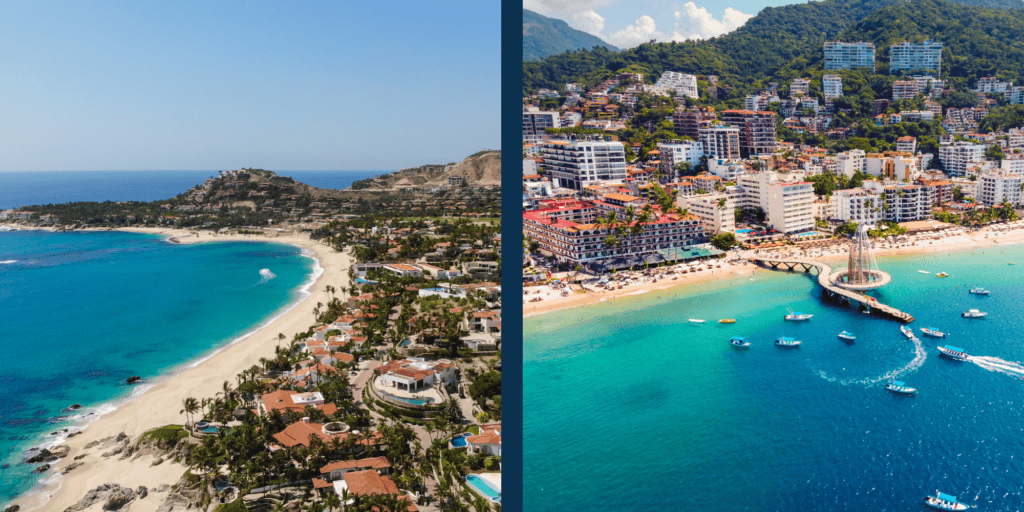
Cabo San Lucas sits at the very tip of the Baja Peninsula, where desert meets ocean in a dramatic collision of red rock and turquoise water. It’s dry almost year-round, dotted with cactus, and the famous El Arco rock formation is basically the town’s logo for a reason. The vibe is polished and a little bit Vegas-meets-beach: think infinity pools, glass architecture and a marina lined with yachts.
Puerto Vallarta is the opposite kind of dramatic. It sits on the Bahía de Banderas, one of the largest bays in North America, backed by the Sierra Madre mountains rolling straight down into jungle that meets the sand. Cobblestone streets wind through the historic Zona Romántica, red-tile roofs stack up the hillsides and the whole town has an old-world, lived-in charm that Cabo doesn’t try to have. This is colonial Mexico with a beach attached, not a resort strip built from scratch.
If you want desert drama and sculpted luxury, Cabo wins. If you want mountains dropping into jungle and a town with actual history and soul, Puerto Vallarta wins.
Vibe and Culture: Resort Town vs. Real Town
This is probably the biggest difference and the one people underestimate most.
Cabo was built for tourism. The Corridor connecting Cabo San Lucas to San José del Cabo is basically a strip of resorts, golf courses and gated developments. It’s beautiful, but it can feel like a bubble, you could spend a week there and barely interact with a non-tourist economy at all.
Puerto Vallarta grew up as a fishing village long before anyone thought to put a resort on it, and that history is still visible everywhere. Locals actually live downtown. The malecón boardwalk fills with families in the evening, not just visitors. Art galleries, food stalls and family-run restaurants sit next to boutique hotels rather than being pushed out to make room for them. It’s a place where you can duck out of your rental and land in a genuine neighborhood, not a resort perimeter.
Neither approach is wrong. Some travelers want the bubble, the predictability, the polish, the sense that everything has been designed for their comfort. Others want a destination that feels alive whether tourists show up or not. That’s the real question to ask yourself before booking either one.
Beaches: Dramatic Rock vs. Swimmable Bay
Cabo’s beaches are stunning to photograph but tricky to swim in. Many of the Pacific-facing beaches have serious undertow and aren’t safe for casual swimming, which is part of why so much of Cabo’s beach life happens around resort pools instead of the open water. The calmer swimming beaches, like Medano, sit closer to the marina and get crowded fast.
Puerto Vallarta’s bay is famously gentle. Because Bahía de Banderas is so enclosed, the water tends to be calm enough for actual swimming, paddleboarding and letting kids splash around without a lifeguard’s whistle going off every five minutes. Beaches like Los Muertos have a lively boardwalk energy, while a short boat ride south gets you to quieter coves like Las Ánimas or Yelapa that feel worlds away from anything urban.
If your trip revolves around lounging by a jaw-dropping pool with an ocean backdrop, Cabo delivers that in spades. If you actually want to swim, snorkel and spend real time in the water, Puerto Vallarta has the edge.
Weather and When to Go
Cabo is desert climate, which means dry heat, very little rain and comfortable temperatures for most of the year, with peak season running roughly November through April. Summer brings intense heat and a real risk of hurricanes given its exposed position at the tip of the peninsula.
Puerto Vallarta has a more tropical pattern. Winter and spring are close to perfect: warm days, low humidity, minimal rain. Summer brings the rainy season, but that doesn’t mean washed-out vacations. Rain usually falls in short, dramatic bursts, often overnight or in the late afternoon, leaving the rest of the day clear and the jungle around the bay looking impossibly green. It’s also when rates drop and the crowds thin out, which is exactly why we’ve been telling guests for a while now that the “off season” here is one of the best-kept secrets in Mexican travel.
Food: Seafood-Forward vs. Full Culinary Scene
Cabo leans heavily into fresh seafood and a beach-club dining culture: think ceviche towers, grilled fish and restaurants where the view does half the work.
Puerto Vallarta has developed one of the most respected culinary scenes in the country, full stop. It’s not just good seafood, it’s a genuinely diverse restaurant landscape shaped by decades of expat chefs, local traditions and a food-forward local population that actually cares about where they eat. Street tacos, fine dining, farm-to-table spots tucked into the hills, all within a short walk or cab ride of each other. Food-focused travelers tend to leave Puerto Vallarta talking about meals the way other people talk about landmarks.
Nightlife and Energy
Cabo’s nightlife is loud, dense and built around a handful of famous strips where the party essentially never stops. If your idea of a great night is a rooftop club or a bar crawl with a bachelor party energy, Cabo is tailor-made for that.
Puerto Vallarta has plenty of nightlife too, especially in the Romantic Zone, but it’s more layered. You’ll find everything from laid-back beach bars to one of the most celebrated LGBTQ+ nightlife scenes in Latin America, alongside quiet wine bars and live music venues that never show up on a typical spring break itinerary. It’s a place that can be as wild or as mellow as you want the night to be.
Who Actually Should Book Which
Book Cabo if: you want a polished resort escape with dramatic desert scenery, don’t mind staying inside a tourist-oriented bubble, and your ideal day involves a pool deck more than the open ocean.
Book Puerto Vallarta if: you want a destination with real culture and history behind it, care about swimmable water and jungle scenery, want a food scene that goes far beyond hotel buffets, or you’re looking for a longer stay where a private rental beats a resort room.
That last point matters more than people expect. A week in a hotel room starts to feel small fast. A week in a real home (with an actual kitchen, more space to spread out and a neighborhood outside your door instead of a security gate) changes the whole shape of the trip. That’s the case for Puerto Vallarta over Cabo in a lot of situations: it’s not just a prettier bay, it’s a place built for staying a while rather than just checking in.
If Puerto Vallarta sounds like your kind of trip, that’s exactly what we do here. Skip the resort room and book a place that actually feels like yours for the week.